Locksmith Keys Parramatta Key Types & Re-Keying
Keys – Key Cutting, Re-Keying & Security Keys
Keys are an important part of everyday life. They provide convenient access to our homes, businesses, vehicles and secure areas while allowing locks to protect against unwanted entry.
Over the years, keys have evolved dramatically. Traditional metal keys remain widely used, but modern locking systems can also use restricted security keys, transponder car keys, electronic credentials, proximity cards and other forms of keyless access.
Not all keys provide the same level of security. Standard keys can be suitable for everyday locks, while restricted key systems and master key systems provide greater control over who can obtain keys and which doors each key can access. Locks can also be re-keyed, keyed alike for convenient one-key access, or keyed to differ when separate keys are required.
Modern automotive keys have also changed considerably, with many vehicles using transponder chips and electronic security technology as part of the vehicle’s immobiliser system.
Whether it is a simple house key, a restricted security key or a sophisticated electronic credential, the basic purpose remains the same: allow authorised access while helping keep unwanted access out.
At Dr Lock, we work with keys and locking systems for residential, commercial and automotive applications, including key cutting, re-keying, keyed alike, keyed to differ, restricted keys and master key systems.
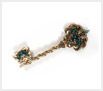
A key is a device designed to operate a lock and provide authorised access. A traditional mechanical key generally consists of two main parts: the blade and the bow (or head).
The blade is the section inserted into the lock’s keyway. Its profile, cuts, grooves or other features are designed to interact with the internal components of a compatible lock. The bow remains outside the lock, providing a convenient grip so the user can insert, turn and operate the key.
Depending on the locking system, keys may be cut to differ, keyed alike, re-keyed, or incorporated into a master key system. Higher-security applications can also use restricted key profiles and controlled key systems to help prevent unauthorised key duplication.
Keys provide a simple and practical method of controlling access to homes, businesses, vehicles, cabinets, safes and other secured areas. While modern technology has introduced electronic credentials, transponders, proximity cards and keyless systems, the traditional mechanical key remains one of the world’s most widely used forms of access control.
Below is a selection of the different types of keys commonly found in Sydney and Australia. The information is provided as a general guide to key types and locking systems.
Please note: Not every key or key system listed on this page is supplied, cut or serviced by Dr Lock – Locksmith Parramatta.
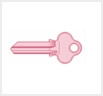
Standard Key
The standard key is one of the most common types of mechanical keys used in Australia. It is widely used for homes, shops, offices, padlocks, deadbolts, door locks and many other everyday locking applications. Standard keys are commonly associated with pin-tumbler cylinders, one of the most widely used mechanical locking systems.
A standard key is generally made from a brass or nickel-plated brass key blank. The blade has a specific profile or keyway, with cuts made along the blade to match the internal pin combination of the lock. When the correctly cut key is inserted, the pins align and allow the cylinder to turn.
One of the major advantages of standard keys is their convenience. Replacement and duplicate keys can generally be cut by a locksmith, and many compatible locks can be re-keyed, keyed alike, keyed to differ or incorporated into a master key system. For example, compatible house locks and padlocks can sometimes be configured to operate from the same key.
Standard keys remain popular because they are simple, reliable, economical and easy to replace. However, where greater control over key duplication is required, a restricted or controlled key system may be more appropriate.
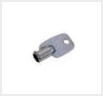
Round Key
A round key, commonly known as a tubular key, is a distinctive type of key used with tubular-style locking cylinders. Unlike a standard flat brass key, the key has a round or cylindrical shape, with the locking cuts positioned around the end of the key.
Tubular keys are commonly found on bike locks, motorcycles, vending machines, lockers, mailboxes, cabinets, gaming and vending equipment, and specialised security locks. Their unusual design makes them easily distinguishable from a conventional house or door key.
Depending on the particular key system, tubular keys can be more difficult to duplicate than standard keys. Cutting them generally requires a specialised tubular key-cutting machine, and not every locksmith, hardware store or key-cutting outlet has the equipment or correct key blank available.
Because of the specialised machinery and key blanks required, a replacement or duplicate tubular key can also cost more than a conventional key. Some tubular key systems may additionally have unusual profiles or manufacturer-specific designs that make obtaining replacement keys more difficult.
For applications such as mailboxes, lockers, cabinets and equipment, a tubular locking system can provide a practical alternative to a conventional flat-key cam lock.
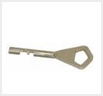
Abloy Key
The Abloy key is a high-security key system developed in Finland in 1907. Unlike a conventional pin-tumbler lock, the traditional Abloy system uses a series of rotating disc tumblers, a design that has become well known for its security, durability and reliability.
One of the distinctive features of an Abloy key is its unusual cut pattern. Rather than the familiar peaks and valleys found along the edge of a standard house key, the key has angled cuts or grooves that rotate the internal discs of the lock to their correct positions. Earlier Abloy keys are often recognised by their distinctive half-round or semicircular key profile.
The disc-detainer design provides strong resistance to many conventional lock-manipulation techniques used on standard pin-tumbler locks. Modern Abloy systems have continued to develop with additional security features and more sophisticated key profiles.
Duplicating an Abloy key generally requires specialised key-cutting equipment, the correct key blank and, for restricted or patented systems, appropriate authorisation. For this reason, not every locksmith or key-cutting business is equipped or authorised to duplicate every type of Abloy key.
Because of the specialised machinery, key blanks and security controls involved, Abloy key cutting can cost considerably more than duplicating a standard house key.
Abloy locking systems are commonly associated with applications requiring high security, reliability and controlled key access, including commercial, industrial and institutional security applications.
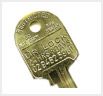
Restricted Keys – High Security Key Systems
Restricted keys are designed to provide a higher level of key control than ordinary standard keys. They are commonly used in commercial buildings, businesses, strata properties, schools, offices and other locations where controlling who can obtain duplicate keys is important.
Unlike a standard key that may be copied at many locksmiths or key-cutting outlets, a restricted key belongs to a controlled key system. Additional keys are generally supplied only by an authorised locksmith or approved dealer for that particular system and according to the system’s authorisation procedures.
Restricted keys use specialised key profiles, keyways and security features. Depending on the system, the key blank may only be available through authorised locksmiths or approved distributors. Some systems also use legally protected key designs to provide additional control over unauthorised key duplication.
A restricted key will often carry identifying information such as a system number, key identification, locksmith or supplier details. When another key is required, the locksmith can check the system records and confirm that the person requesting the key has the appropriate authority before cutting it.
Restricted key systems can also be incorporated into a master key system, allowing different users to have different levels of access. For example, an individual key may operate only one office, while an authorised master key can operate multiple doors within the same building.
Restricted and security key systems are available for many types of commercial door locks, cylinders, padlocks and access-control applications.
For businesses and property owners who need better control over keys and duplication, a professionally designed restricted key system can provide greater security, controlled access and peace of mind.
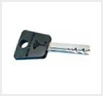
Mul-T-Lock Key – High Security Restricted Key System
A Mul-T-Lock key is a high-security key designed for Mul-T-Lock locking systems. Originally developed in Israel, Mul-T-Lock products are now used internationally in residential, commercial and high-security applications.
One of the easiest ways to recognise many Mul-T-Lock keys is by their distinctive dimple-cut design. Unlike a conventional house key with cuts along the edge, Mul-T-Lock keys use precisely positioned dimples on the key blade. Certain Mul-T-Lock systems use the company’s well-known telescopic pin technology, with an inner and outer pin arrangement that provides additional locking combinations and security.
Mul-T-Lock has developed numerous key platforms over the years, with newer high-security systems incorporating additional features intended to provide resistance against common methods of attack. Depending on the particular cylinder and key system, security features can include resistance to picking, bumping, drilling and key manipulation, together with controlled or restricted key duplication.
Many Mul-T-Lock systems use restricted key control. Additional keys may require the appropriate authorisation or key-control information before they can be duplicated. This helps businesses, property owners and authorised users maintain greater control over who can obtain additional keys.
Mul-T-Lock systems can be used with door cylinders, commercial locks, padlocks, master key systems and other security applications, making them suitable where both physical security and key control are important.
If you need a Mul-T-Lock duplicate key, the correct key system and authorisation requirements must first be identified. Where an authorisation card or other proof of authority is required, it must be provided before an additional restricted key can be supplied.
Dr Lock is an authorised Mul-T-Lock dealer and can assist with Mul-T-Lock high-security key systems, restricted keys, master key systems, locks and professional installation.
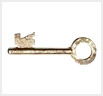
Mortice Key – Old Style, Skeleton & Flag Keys
A mortice key is a traditional style of mechanical key that has been used for hundreds of years. These keys are often referred to by different names, including mortice keys, skeleton keys, flag keys, old-style keys and antique keys, depending on the particular lock and key design.
There are many different types of mortice keys, ranging from relatively simple designs through to more complex keys used with higher-security lever locks. Unlike a modern cylinder key, a traditional mortice key normally has a long stem with a shaped bit or flag at the end. The shape and cuts of this section interact with the internal levers or components of the lock.
Mortice keys are commonly found on older door locks, antique furniture, desks, cabinets, cupboards, safes and traditional mortice locks. Many older locks remain in service today, so replacement and duplicate keys are still required.
Duplicating a mortice key can require considerably more skill than copying a standard house key. Depending on the key and lock, a locksmith may need to cut, file, shape or hand-finish the key to correctly operate the lock. Some unusual or older keys may need to be made or adjusted individually rather than simply duplicated by an automatic key-cutting machine.
Because there are so many different mortice key profiles, lengths and bit configurations, identifying the correct blank is an important part of producing a working replacement.
For unusual, antique or older locking systems, an experienced locksmith may also need to inspect the original key or lock before determining whether a replacement mortice key can be made.
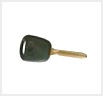
Car Keys – Transponder & Immobiliser Keys
Car keys have changed considerably over the past few decades. Older vehicles commonly used relatively simple mechanical keys, while modern vehicles can combine a precision-cut mechanical key with transponder, immobiliser and remote-control technology.
Many automotive keys are double-sided or reversible, allowing the key to be inserted into the lock in either orientation. Other vehicles use laser-cut or sidewinder keys, where the key has a milled track along the blade rather than the traditional edge-cut pattern found on many older car keys.
One of the most important developments in automotive key security has been the transponder key. A transponder is a small electronic chip located inside the key head or incorporated into the vehicle’s remote or smart key.
When the key is used, the vehicle’s immobiliser system checks for the correctly programmed transponder. If the vehicle does not recognise the transponder code, the engine will generally remain immobilised and will not start, even if the mechanical part of the key correctly operates the ignition.
This means that replacing many modern car keys involves more than simply cutting the metal blade. The replacement key may also need to be programmed, cloned or electronically matched to the vehicle, depending on the make, model, year and immobiliser system.
Modern vehicles can use several types of automotive keys, including standard mechanical keys, transponder keys, remote keys, flip keys, proximity keys and smart keys.
Because of the additional electronics and programming involved, a transponder or remote car key will generally cost more to replace than a basic mechanical key. However, the combination of the mechanical key and electronic immobiliser provides an important additional layer of vehicle security and theft protection.
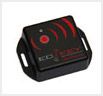
Bluetooth Key – Turn Your Smartphone Into a Digital Key
A Bluetooth key allows a compatible smartphone or mobile device to act as a digital key for an electronic locking or access-control system. Instead of inserting a traditional metal key, an authorised user can communicate with the Bluetooth-enabled device using their phone.
Once the smartphone has been paired, registered or authorised with the system, it can provide a convenient method of keyless access. Depending on the equipment, access may be activated through an app, digital credential or another authorised Bluetooth connection.
Bluetooth technology can be integrated with many types of electronic security equipment, including electronic door locks, automatic doors, access-control systems, intercoms and other electronic entry systems.
One advantage of a digital key is that access credentials can potentially be managed without issuing a physical key. Depending on the particular system, administrators may be able to issue, restrict or revoke access when requirements change.
Bluetooth access technology has continued to develop as smartphones have become a common part of modern access-control systems. Today’s solutions can combine Bluetooth with technologies such as NFC, mobile credentials, PIN codes, proximity cards and cloud-based access management.
While very different from the traditional mechanical key, the purpose remains much the same: identify an authorised user and provide convenient access while helping prevent unauthorised entry.

Swipe Card & Proximity Card – Electronic Access Keys
A swipe card or proximity card is an electronic credential used with an access control system to provide authorised entry through doors, gates and other secured areas. Instead of using a traditional mechanical key, the user presents a card to an electronic reader.
Although often grouped together, swipe cards and proximity cards work differently. A traditional swipe card normally uses a magnetic stripe and must be physically passed through a compatible reader. A proximity card uses radio-frequency identification (RFID) technology and generally only needs to be held close to the reader.
Proximity cards are convenient because they are usually similar in size to a credit card and can be carried in a wallet, purse or card holder. The same technology can also be supplied in smaller formats such as key fobs and tags.
One of the major advantages of an electronic access-control system is the ability to manage users electronically. Individual cards or credentials can be issued to authorised people and, depending on the system, access can be added, restricted or cancelled without having to replace the physical door lock.
More advanced systems can also control which doors a person can access and when they are permitted to enter, while maintaining an electronic record of access events. This makes electronic credentials particularly useful for offices, commercial buildings, apartment complexes and other properties requiring controlled access.
The level of security varies considerably between different card technologies. Older proximity and magnetic-stripe systems may be susceptible to duplication, while newer systems can use encrypted communication and more advanced authentication technology to provide greater protection against unauthorised copying.
For this reason, not every proximity card should automatically be considered a high-security key. The security of the system depends on the card technology, reader, encryption and access-control system being used.
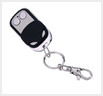
Remote Key – Wireless & Keyless Entry
A remote key, also known as a keyless entry remote, is an electronic device that communicates wirelessly with a compatible lock, vehicle, gate, garage door or access-control system. Instead of inserting a traditional key, the user presses a button to send a coded radio-frequency signal to the receiving device.
There are many different types of remote keys, using different frequencies, coding systems and security technologies. Older or simpler remotes may use a fixed code, where the same identification code is transmitted each time the remote is operated. Depending on the system, some fixed-code remotes can be duplicated or replaced with a compatible remote.
More advanced remote systems can use rolling-code technology. With a rolling-code system, the transmitted code changes each time the remote is used. The remote and receiver remain synchronised so that previously transmitted codes cannot normally be reused to operate the system. This provides greater protection against simple interception and replay attacks.
Depending on the equipment, a replacement remote may be copied, cloned, programmed or enrolled directly into the receiver or access-control system. Some systems require specialised programming equipment or an authorised procedure before a new remote can be added.
Remote keys are commonly used for vehicles, garage doors, automatic gates, alarm systems, electronic locks and access-control systems.
The level of security varies considerably between remote systems. The operating frequency alone does not determine how secure a remote is; the coding, encryption, authentication and communication technology used by the system are more important.
Modern remote keys provide a convenient form of wireless keyless access, while properly designed rolling-code and encrypted systems can provide significantly greater protection than basic fixed-code remote controls.
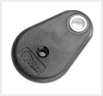
Touch Key – Electronic Contact Key
A touch key, also known as a contact key or electronic touch key, is an electronic access credential used with compatible access control and security systems. Instead of using the cuts of a traditional mechanical key, the touch key contains a unique electronic identification code that is recognised by the system.
To operate the system, the user places the metal contact on the touch key against the compatible touch reader, which is commonly installed beside a door, gate or other controlled entry point. The reader identifies the credential and sends the information to the access control system. If the key is authorised, the system allows access.
Unlike a proximity card, a touch key normally requires physical contact with the reader. However, there is very little mechanical movement involved, making the system durable compared with conventional mechanical keys and locks.
One of the advantages of an electronic touch-key system is controlled access management. New keys can be enrolled into the system, while lost, stolen or unwanted keys can be removed from the authorised user list without necessarily replacing the door lock.
Different manufacturers and access control systems use different types of touch keys, readers and electronic protocols. A touch key designed for one system may therefore not be compatible with another system.
The security and duplication resistance of a touch key depends on the particular technology being used. Some older electronic credentials may have limitations, while more advanced systems provide stronger identification and access control.
Touch keys are commonly used where a compact, durable and electronically managed key system is required, providing an alternative to conventional mechanical keys, swipe cards and proximity credentials.
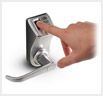
Finger Key – Biometric Fingerprint Access
A finger key, more commonly known as fingerprint or biometric access, uses a person’s fingerprint as an electronic credential. Instead of carrying a traditional key, card or remote, an authorised user can gain access by placing their finger on a compatible biometric reader.
Fingerprint readers capture characteristics of a fingerprint and compare them with biometric information previously enrolled in the system. When the system successfully verifies an authorised user, it can release the electronic lock and allow access.
Biometric access systems are now available for many security applications, including door locks, access control systems, safes, offices, commercial buildings and time-and-attendance systems. They can be particularly convenient where users do not want to carry keys, cards or other physical credentials.
One major advantage is electronic access management. Authorised users can be enrolled into the system, while access for former employees, tenants or other users can be removed electronically. There is no physical key to lose or conventional key to duplicate.
Fingerprint systems can also be useful in locations with multiple authorised users because each person’s access can be managed individually. More advanced access control systems may combine fingerprint recognition with a PIN, card, mobile credential or another authentication method for additional security.
The security and reliability of biometric access varies between products. Reader quality, system design, environmental conditions and the authentication technology used can all affect performance. For this reason, a biometric system should be selected to suit the particular security application rather than assuming every fingerprint reader provides the same level of protection.
Need Help Identifying a Key?
There are thousands of different mechanical, restricted, electronic, automotive and specialised keys in use throughout Australia. Many older keys and uncommon key blanks are no longer widely available, and it is simply not practical for any locksmith to keep every type of key in stock.
Dr Lock – Locksmith Parramatta has decades of practical locksmith experience and can help identify many different keys and locking systems. Our locksmith services include key cutting, re-keying, keyed alike, keyed to differ, restricted key systems, master key systems, automotive keys and electronic access systems.
If we cannot supply or duplicate a particular key, we will do our best to identify the key system and point you in the right direction.
For customers looking to purchase keys and related products online, Dr Lock Shop carries a separate range of available keys, key blanks and security products.
For locksmith assistance in Parramatta and surrounding Western Sydney, call Dr Lock on 02 989 12345.
Hi, Just saw your video on Youtube re the C32T mortice key.
Could I get a price for one of those mortise lock keys please and shipping to postcode 6210 in Western Australia.
Thanks and rgds.
I need a security key cut — it is registered with API but they no longer have blanks to cut the key .. can you help?
Hi Vish,
If a security key is registered with a particular locksmith, you will have to order that key with them.No other locksmith will cut another locksmiths security key. If they no longer have the blanks, you will have to take that up with them and ask then to reorder them. If they were the people that sold you the key in the first place they should be able to reorder more keys to cut for you.